
Your Cart is Empty
Powdered Flavor vs Liquid Flavor: Which One Belongs in Your Product?
Flavors featured in this article
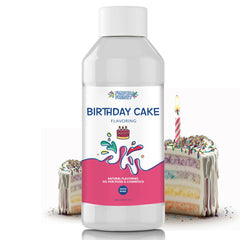
Birthday Cake Flavoring
$14.95
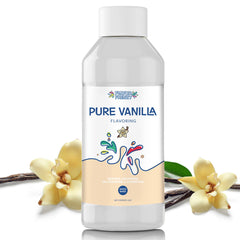
Bourbon Pure Vanilla Extract
$14.95
The short answer: Powdered flavor wins on shelf life, shipping weight and dosing precision by scale. Liquid flavor wins on flavor intensity per gram, blending speed and cost efficiency at volume. The right pick depends on your product's moisture content, your production line, and how far your finished goods travel before they are used.
Written by the technical team at Flavor Frenzy, a BRCGS AA, cGMP and Kosher certified flavor and color manufacturer in Los Angeles with over 1,000 formulations.
What is the real difference between powdered and liquid flavor?
Powdered flavor is typically produced by spray drying, where a liquid flavor and carrier emulsion is atomized into fine droplets and dried with hot air, locking the flavor into a dry particle. Liquid flavor skips that step and stays in the water or oil soluble form it was compounded in. The format changes how the flavor behaves in your process more than it changes the flavor itself.
Which one holds up longer on the shelf?
Powdered flavors generally have a longer shelf life than liquids because low moisture content limits microbial growth and slows oxidation. Liquid flavors are more sensitive to light, heat and air exposure once a container is opened repeatedly. If your finished product sits in a warehouse for months or ships long distances before use, powder is usually the safer default.
Which one is easier to dose accurately at scale?
Powders are simple to weigh out by hand or with basic scales, which makes them forgiving for smaller runs and manual batching. Liquids come out ahead once you are running a continuous or semi-automated line, because metering pumps can inject a liquid flavor in-line with tighter accuracy than a technician weighing powder batch to batch. Liquids also tend to deliver more flavor per gram, so use rates and therefore per-unit flavor cost can come out lower even though the raw liquid often costs more per pound.
How do the two compare across common applications?
Dry mixes and seasonings
Better fit: Powdered flavor
Why: Matches the base product's moisture content and avoids introducing wet spots into a dry blend
Beverages and dairy
Better fit: Liquid flavor
Why: Disperses immediately into an already wet base with no rehydration step or clumping risk, which is why it dominates our beverage and dairy lines
Gummies
Better fit: Usually liquid, water soluble
Why: The gummy slurry is water based, so a water soluble liquid disperses cleanly into the cook
Baking applications
Better fit: Often powdered
Why: Survives oven heat better and blends directly into dry ingredient systems without extra mixing steps, which is the standard we build to across our baking collection
What does each format cost to ship and store?
Liquid flavors are heavier and bulkier per unit of finished flavor, which raises freight cost and warehouse footprint, especially for brands shipping across the country or importing components. Powders pack tighter and weigh less, which is part of why co-packers and multi-site manufacturers often standardize on powder for anything moving between facilities. The tradeoff shows up on the receiving end too, since liquids are ready to use straight out of the drum while powders sometimes need a rehydration or premix step depending on the application.
How do I decide which format is right for my product?
Start with your base product's moisture content and your production line's capability. A wet base with metering pump capacity points to liquid. A dry base, manual batching, or a long distribution chain points to powder. From there it comes down to cost per finished unit once you compare use rates, not just cost per pound of raw flavor, which is where a lot of first-time buyers get the comparison wrong.
Frequently asked questions
Is liquid flavor stronger than powdered flavor?
Liquid flavor typically delivers more flavor per gram, which usually means a lower use rate and can lower cost per finished unit even when the liquid costs more per pound.
Does powdered flavor last longer than liquid flavor?
Yes in most cases. Low moisture content in powders limits microbial growth and slows the degradation that affects liquid flavors, particularly after a container has been opened.
Can I switch a product from liquid to powdered flavor without reformulating?
Not directly. Switching format usually changes the use rate and can shift the flavor profile slightly, so it needs to run as a small reformulation with a bench sample, not a straight swap.
Which format is better for a gummy manufacturer scaling up production?
Most gummy lines run water soluble liquid flavor because the slurry is water based and metering pumps handle liquid injection more precisely at higher volumes. For a deeper look at the carrier decision itself, see our guide on water soluble vs oil soluble flavors for gummies.
Do powdered and liquid versions of the same flavor taste identical?
They should taste very close if built from the same profile, though the spray drying process and the carrier used in a powder can shift the top notes slightly compared to the liquid original.
Get a free sample kit
Tell us what you are making and we will send powdered and liquid flavor samples matched to your application.