
Your Cart is Empty
How Compounding Pharmacies Flavor Medications Patients Will Actually Take
Flavors featured in this article
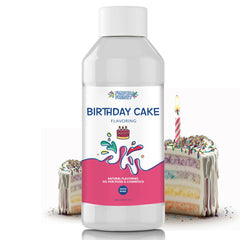
Birthday Cake Flavoring
$14.95
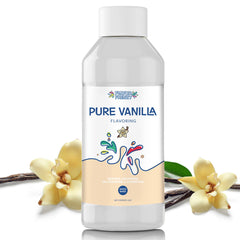
Bourbon Pure Vanilla Extract
$14.95
Short answer: match the flavor system to the base, correct the bitterness before you add sweetness, and start flavor at the low end of the use range. Most flavoring problems in a compounding pharmacy are not flavor problems. They are base problems and sequencing problems.
Match the flavor to the base, not to the request
A patient asks for bubblegum. The thing that decides whether bubblegum works is what the preparation is made of.
Water soluble liquid flavors disperse cleanly in aqueous oral suspensions, syrups, and vehicles built on suspending agents. They are the default for most liquid orals.
Oil soluble liquid flavors belong in lipid bases, chocolate troches, and anything with meaningful fat content, where a water soluble flavor will bead up, separate, or read thin.
Powdered flavors are the right pick for capsule blends, oral powders, and any dry preparation where adding a liquid would shift moisture content and change how the powder flows.
Getting this wrong shows up as separation, cloudiness, a flavor that fades within a day, or a preparation that tastes different at the top and the bottom of the bottle.
Correct bitterness first, sweetness second, flavor third
The common move with a harsh preparation is to add more flavor and more sweetener. That usually makes it worse. Bitterness and sweetness register separately, so stacking a bigger cherry note on top of a bitter active gives you bitter cherry rather than cherry.
Bitter blockers suppress the bitter signal so the flavor you picked can actually come through. Sweetness enhancers let you build perceived sweetness without pushing sugar or high intensity sweetener to a level that brings its own metallic or lingering aftertaste.
Run it in this order every time: correct bitterness, set sweetness, then dial the flavor.
Start low on flavor dosing
Flavor concentrates are built to be used at fractions of a percent. Overflavoring is as common as underflavoring and it is harder to fix, because you cannot subtract. Start at the bottom of the recommended use range, taste at final dilution, and step up from there.
Keep a written record of the exact use level that worked for each base. A pharmacy that documents flavor levels the way it documents everything else stops relitigating the same decision every time a prescription repeats.
Some profiles cover harshness better than others
Delicate profiles like light vanilla or soft florals have very little masking power. They sit politely next to a harsh note instead of covering it.
Profiles with more structure carry more of the load. Wintergreen and spearmint bring a cooling character that pulls attention away from lingering bitterness. Strong berry and tart citrus profiles hold up well against astringent bases. Chocolate, caramel, and butterscotch types pair naturally with oil bases and troches.
Cooling agents are worth knowing about here. They create a physical cooling sensation rather than a taste, which can shorten how long an unpleasant note sits on the palate.
Test the preparation the way it will actually be used
Taste at final dilution, never at concentrate. Taste at the temperature the preparation will be stored and taken at, because refrigeration mutes both sweetness and aroma. Taste again after 24 to 48 hours, since some flavors shift as they sit in a vehicle. And confirm the flavor still reads correctly with every active in the batch, not before.
FAQ
Can I use the same flavor in an aqueous base and an oil base?
Usually not. Ask for the version formulated for your base. Many profiles exist in both water soluble and oil soluble form, but they are different products and they are not interchangeable.
How much flavor should I add?
Start at the low end of the supplier use range for that specific flavor and that specific base, then step up in small increments. Use levels vary widely between profiles.
Do bitter blockers change the flavor?
They reduce bitterness perception rather than adding a taste of their own. In practice most preparations need less flavor once a bitter blocker is in, not more.
Can I get flavors without added color?
Yes. We manufacture flavors and natural colors as separate product lines, so color stays a decision you make on its own rather than something bundled into the flavor.
What certifications does your facility hold?
Flavor Frenzy operates a BRCGS AA and cGMP facility in Los Angeles and is Kosher certified.
Get a sample kit
We have built more than 1,000 formulations, and we would rather send you a few to taste than describe them in writing. Tell us your base type and what you are trying to cover, and we will put together a free sample kit.
Request a free sample kit. If you already know the exact profile you want built from scratch, start here instead: custom flavor development.